
29 Sep One Modular System, Multiple Training Possibilities: Discover Training Wall
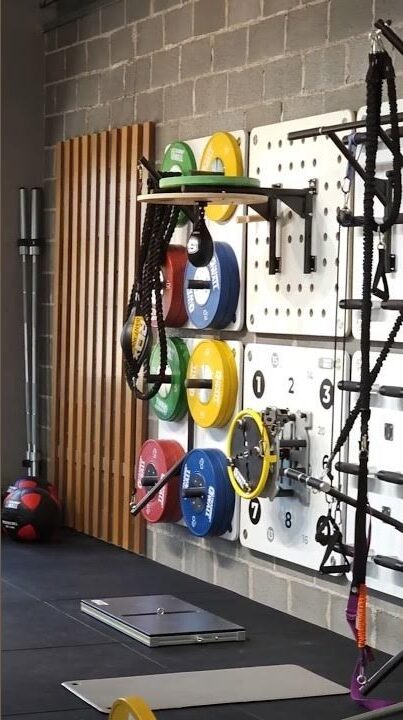
A versatile training space needs to accommodate different exercises, users and session formats. Training Wall brings together modular panels, portable structures and interchangeable accessories so that coaches can organise different training tasks within a shared equipment system.
The combination of TeamMate, SpinWall Compact, Speed Tool, Climbing Panel and Low Gravity illustrates this approach. Each component has a distinct role, from transporting equipment and generating resistance to providing grip options or assistance during movement.
TeamMate: bringing the training station to the session
TeamMate provides a portable structure for compatible Training Wall accessories. Its wheels allow the equipment to be relocated, supporting sessions in different areas of a facility or in suitable outdoor spaces.
This mobility helps coaches organise equipment around the planned activity. Before starting, the complete setup should be checked for stability, adequate working space and a suitable surface, taking into account the direction and magnitude of the forces generated during exercise.
SpinWall Compact: resistance through rotational inertia
SpinWall Compact uses a flywheel mechanism. The athlete applies force to accelerate a rotating mass, then controls the return as the cord rewinds. In appropriate exercises, this creates successive concentric and eccentric muscular actions.
The mechanical demand depends on the selected moment of inertia, the effort applied and the execution strategy. Adjusting inertia changes the conditions of the task; it does not prescribe a fixed force in the same way as selecting a conventional weight.
Its compact format allows flywheel work to be incorporated into compatible portable or panel-based configurations.
Speed Tool: an extended working range with elastic resistance
Speed Tool provides another loading option, using elastic resistance rather than a flywheel. Its extended working range and flattened resistance curve allow coaches to explore movements that travel farther from the attachment point.
A flatter resistance curve means that tension increases less markedly across the working range than it would with a conventional elastic setup. It does not mean that muscular effort remains identical throughout the movement: joint position, leverage and the direction of pull still influence the demand.
This distinction matters when selecting equipment. Elastic resistance and flywheel inertia create different loading conditions and should be programmed according to the task.
Climbing Panel: grip options within coordinated movement
The Climbing Panel introduces different hand-contact options through climbing holds installed on the panel. Hold selection and placement allow variations in grip, reaching height and upper-limb position.
These options can be used to organise tasks involving the hand, forearm, elbow and shoulder. The demand depends on how the holds are used: practising contact with the feet supported differs substantially from transferring body weight through the hands.
Within rehabilitation, grip selection and loading should follow the individual’s clinical assessment and stage of recovery.
Low Gravity: assistance for selected movement tasks
The Low Gravity Tool, used with an appropriate harness and configuration, provides partial body-weight support during exercise.
This assistance creates another way to adapt movement tasks. Its effect depends on the support arrangement, body position and points of contact. Partial body-weight support should not be interpreted as an identical reduction in load at every joint.
When used in rehabilitation, the exercise and level of assistance should be selected by the treating professional according to the person’s needs and any loading restrictions.
Organising individual sessions and group training
A modular system allows the equipment configuration to follow the session objective. Coaches can organise different stations or change compatible accessories as the programme develops.
Useful planning priorities include:
- Define the task: identify whether the exercise focuses on force production, controlled braking, grip, reaching or assisted movement.
- Select the loading method: choose the resistance or assistance that fits the intended task.
- Allocate working space: account for movement paths, cables, access and supervision around each station.
- Match the setup to the user: adjust positions, working range and difficulty to current ability.
- Plan transitions: check attachment points and equipment settings whenever the configuration changes.
A shared system with different applications
Training Wall’s modular approach connects several training resources within one equipment concept. Portability, flywheel resistance, elastic loading, grip variations and assisted exercise give professionals different ways to build sessions around specific objectives.
The benefit comes from selecting the right combination for the people using the space, whether the setting is personal training, group fitness, sports preparation or professionally supervised rehabilitation.
Explore Training Wall equipment or contact our team to discuss a configuration for your facility.