

30 Sep Cardan Tool: controlled landmine training within a modular system
A landmine exercise changes when the pivot moves. The height of the attachment, the angle of the bar and the athlete’s position all influence the movement. Cardan Tool brings these variables into the Training Wall system, helping coaches organise bar-based strength work within a compatible panel installation or mobile station.
Rather than treating every landmine exercise as the same task, coaches can consider the intended movement, available space and athlete’s starting position. These choices help define a session with a clear purpose and a progression that can be observed.
See Cardan Tool in action
Watch the original Cardan Tool demonstration on YouTube.
An adjustable pivot for Olympic-bar exercises
Cardan Tool is designed for an Olympic bar and can be positioned at different heights within a compatible configuration. Changing the pivot height alters the geometry of the exercise, so the same bar can support different pressing, pulling or rotational tasks.
The bar travels around the pivot. Consequently, the resistance experienced at the hands depends on more than the weight of the plates: bar angle, hand position and movement range also affect the task. Comparing two configurations requires attention to these variables, rather than assuming that identical plate loads create identical demands.
For coaches, the practical question is how to select the stance, bar path and range for the person in front of them. A rotational exercise can involve coordinated contributions from the feet, hips, trunk and shoulder girdle. The desired contribution of each region should follow the session objective.
From a wall installation to a mobile station
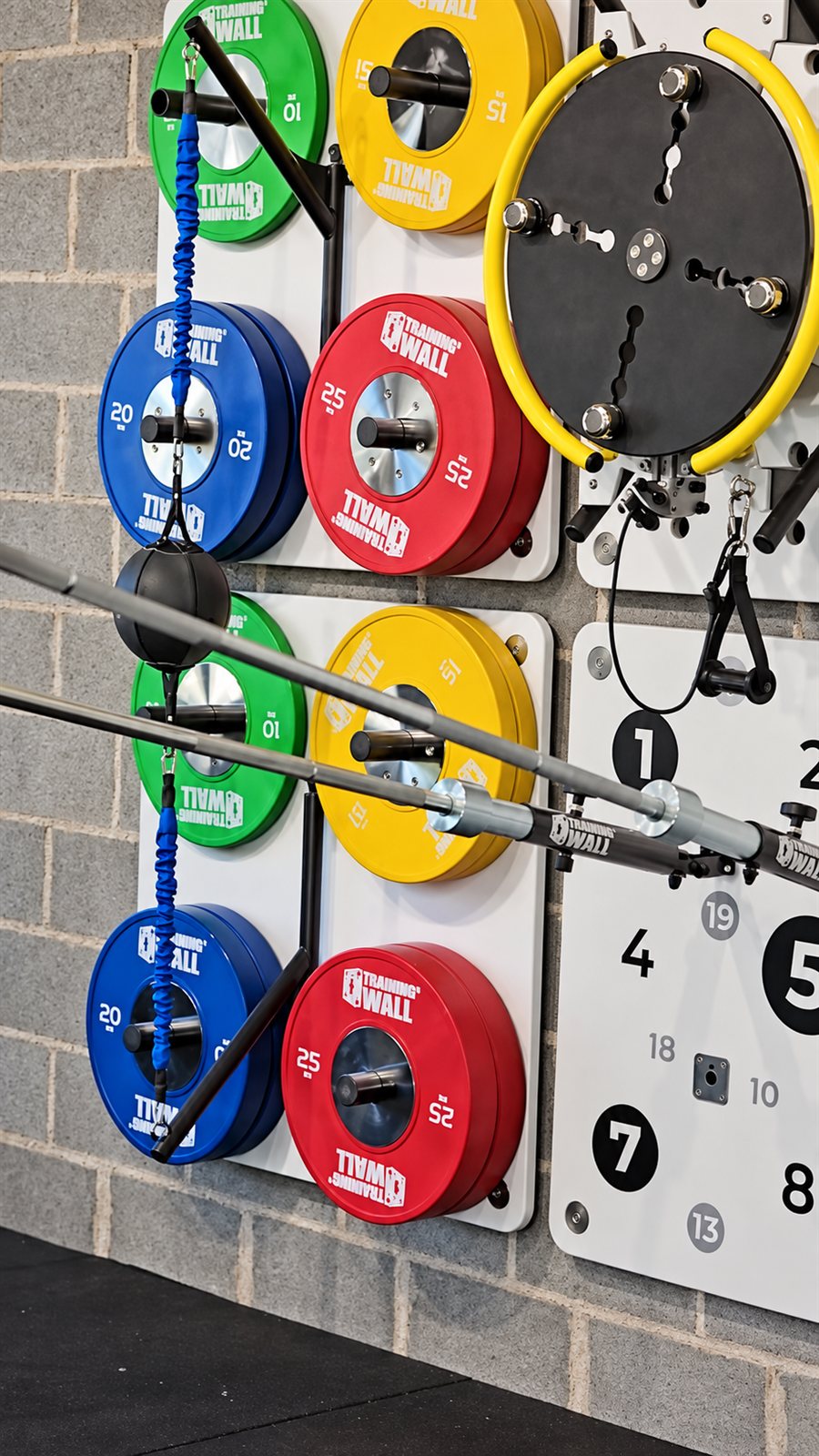
A modular setup helps connect a familiar strength exercise with the wider training environment. Cardan Tool can be incorporated into compatible Training Wall configurations, while the demonstration also shows its use with mobile structures.
In a personal training studio, the coach can position the station alongside related exercises. In a sports setting, a compatible TeamMate configuration offers another way to organise the training area. Compatibility, attachment instructions and available clearance should be checked before use.
The layout matters as much as the exercise selection. Leave room for the bar’s complete path, the athlete’s stance and the coach’s observation position. A useful station allows the movement to be performed without interference from adjacent equipment or other users.
Introduce the exercise in four stages
- Define the movement. Choose a press, pull or rotation and clarify whether the lower body should remain relatively stable or contribute to the task.
- Set the pivot and stance. Check the attachment, starting position and intended bar path. Make sure the athlete can move through the selected range without crowding the station.
- Rehearse with a manageable load. Establish the start, finish and controlled return. Observe consistency across repetitions before adding more resistance or complexity.
- Progress one variable at a time. Adjust load, stance, range or tempo while checking that the exercise still serves its original purpose. Record the configuration so it can be reproduced.
In rehabilitation or return-to-training work, exercise selection and progression should be guided by the professional responsible for the programme. A demonstration illustrates equipment use; it does not establish an individual prescription.
Plan a configuration that fits your space
Cardan Tool adds a recognisable strength-training format to an adaptable equipment system. Its value comes from matching the configuration to the exercise, the person and the available training area.
Explore the Cardan Tool product information, use the Training Wall configurator, or contact our team to discuss a suitable setup.
Sources: the Cardan Tool product information and the original Training Wall video linked above. The coaching stages are practical guidance developed for this article.