

01 Oct SpinWall Plate and Load Plates: stable foundations for mixed resistance training
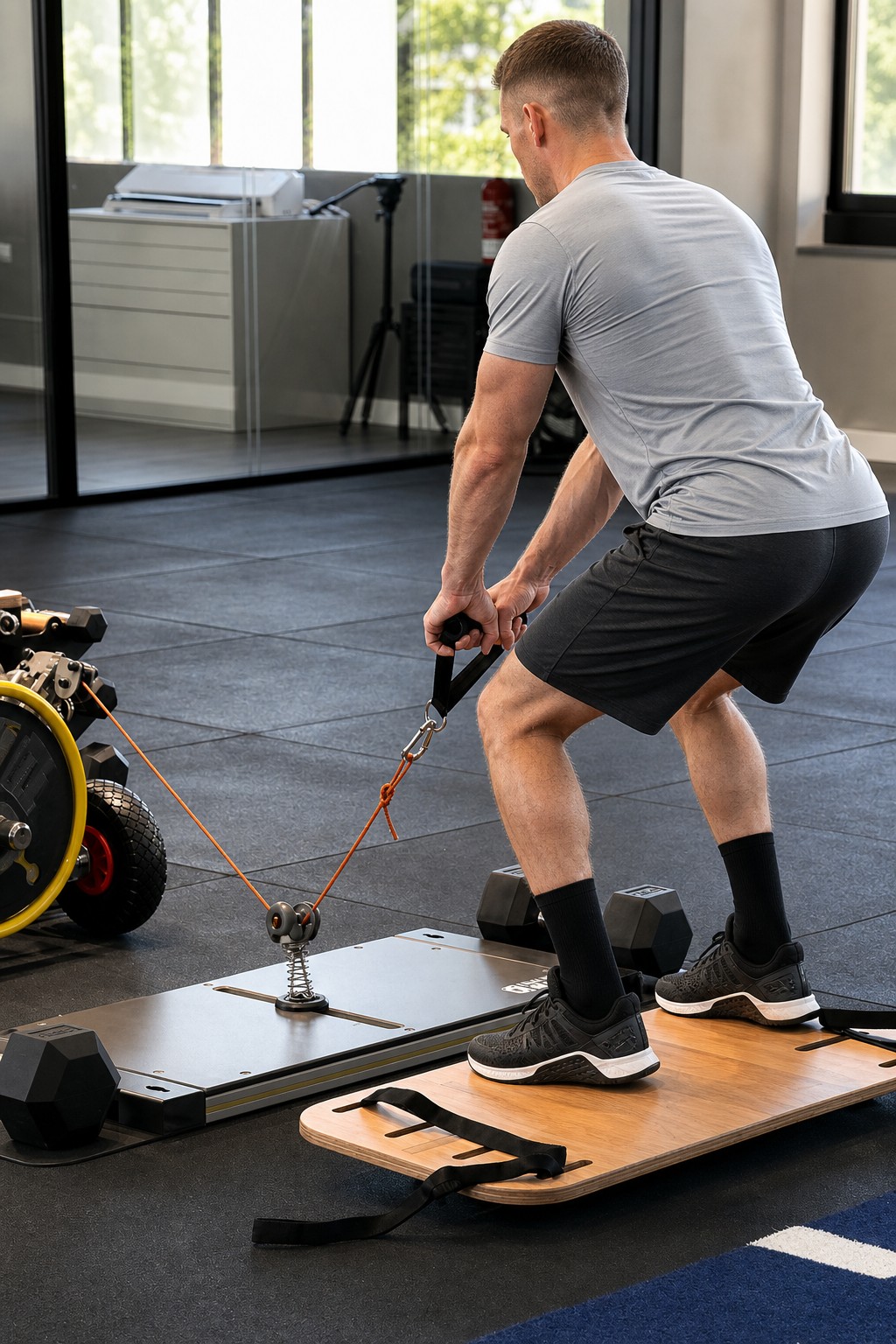
Power-oriented training asks more of the setup than simply providing resistance. The base must remain appropriate for the forces applied, and the athlete needs a clear working area. SpinWall Plate with Load Plates addresses the foundation of the station, while the option to attach Speed Trainer broadens the exercises that can be organised around it.
What the platform and added loading contribute
The Load Plates are presented as a way to stabilise the SpinWall Plate during fast or forceful work. That stable base matters when the coach wants to concentrate on the exercise instead of compensating for unwanted movement of the platform. Speed Trainer adds a separate elastic option for tasks involving acceleration, deceleration or controlled return.
The platform provides a surface for the exercise and a connection to the SpinWall setup. Additional loading should be considered in relation to the intended force direction and movement, not as a universal guarantee of stability. Leaving the usable surface clear also matters: the athlete needs a defined position and room to complete the task without stepping around loose equipment.
Elastic and inertial work in the same area
These tools should be programmed as distinct stimuli. Inertial resistance depends on how the user accelerates and brakes the flywheel; an elastic tool changes tension through its working range. Combining them can broaden session options, but the setup, load and movement path should remain appropriate for the athlete.
A coach may organise one block on the platform and another using an elastic attachment. This is different from asking the athlete to handle both resistances simultaneously. Separating the tasks can make the purpose of each block easier to understand and allows the coach to adjust the load and recovery independently. More configuration options should lead to clearer programming.
Distinguish stabilising weight from training resistance
Loading used to help stabilise the platform has a different purpose from the resistance the athlete is asked to overcome. Keep the two decisions separate when describing a session. Adding plates to the base does not, by itself, define the exercise intensity or confirm that every direction of pull is suitable. The complete arrangement should be checked against the intended movement and the instructions for the equipment before starting the working sets.
A practical coaching example is to prepare a platform task first, then organise a separate elastic-resistance block. Explain where the athlete should stand and where the movement ends for each task. When switching between them, recheck the free surface and the attachment arrangement rather than treating the transition as a simple change of handle. Observe the start, the return and the finish as well as the main effort. This gives the coach a clearer basis for deciding whether to change the exercise, its intensity or the station layout.
Preparing the station before increasing speed
- Position the platform on a suitable surface and establish where the athlete will work.
- Prepare the added loading and attachments for the intended exercise, checking the complete setup.
- Rehearse the full movement at a manageable intensity, including the return and stopping phase.
- Increase speed or effort only while the platform, working space and execution remain appropriate.
This combination is especially relevant when a facility wants to connect lower-body strength work with elastic movement tasks in one planned area. The setup should make those tasks easier to organise and coach.
Plan your training space with the Training Wall configurator or contact our team to discuss a configuration suited to your needs.
Sources and resources
The organisation examples and practical stages are editorial suggestions for this article. Adapt them to the objective, the participant and the equipment instructions.