

01 Oct Integrated training: connect strength, mobility and movement control
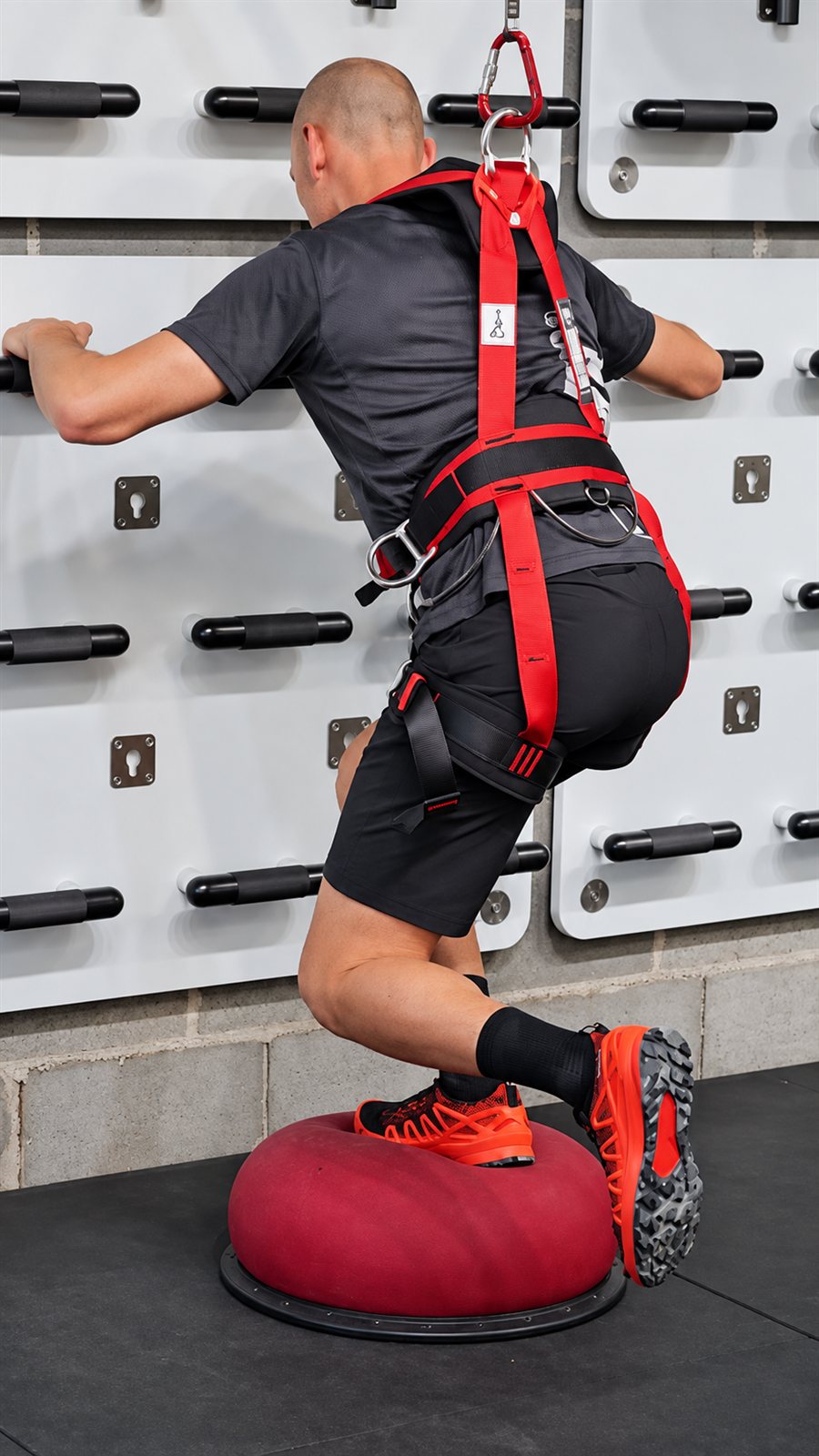
Strength, mobility, stability and coordination do not have to occupy separate parts of a programme with no relationship between them. An integrated session gives these abilities a shared direction. Training Wall provides different tools and supports that allow a professional to connect tasks, choosing the resistance and movement conditions that fit the participant rather than changing equipment simply for variety.
Begin with a shared session objective
Training Wall allows the coach to move between different tools and resistance types within a structured space. A session may first establish a movement pattern, then add a controlled load and finally apply it in a task closer to the participant’s goal. The order is a coaching decision, not a fixed formula.
For example, a programme may focus on controlling a reaching task before introducing a related pull against resistance. Another may connect a lower-body pattern with a task that asks the participant to manage a different direction of force. These are planning examples, not a universal exercise order. The connection should be understandable to both the coach and the user.
Connect the blocks through movement and intent
Measure progress by what the person can perform consistently and how the task relates to daily activity or sport. A modular system helps organise the options; individual assessment and sensible progression make them effective.
Integration also includes the demands created by fatigue and equipment changes. An exercise that was well controlled at the beginning may look different later in the session. The coach should be able to simplify, rest or change the order without losing the main objective. A modular station is useful when it makes those decisions easier to implement.
Make the connection between exercises explicit
An integrated session is easier to follow when the participant understands why one task leads to the next. The coach can identify a shared movement, a related direction of force or a specific control requirement. This explanation does not need to be long. A short instruction can show which element is being practised again and which demand changes. That clarity helps distinguish a purposeful sequence from a collection of exercises selected only because they use different tools.
For example, a session might begin by exploring a supported movement and later introduce resistance in a related pattern. Whether this order is appropriate depends on the participant and the priority of the day. Review the main task again after the change: does the person still recognise its start and finish, and can they organise the return? If fatigue changes the response, adjust recovery or simplify the exercise. Record the decision so that the next session develops from what happened rather than automatically adding another tool or another block.
An integrated session in four stages
- Prepare the pattern: establish the movement and the support needed to understand it.
- Develop the main capacity: choose the resistance and effort appropriate to the priority of the session.
- Apply it in a related task: change the context only when it adds a meaningful demand.
- Review the result: compare execution, effort and consistency before deciding the next progression.
An integrated programme is coherent because its tasks are connected. Training Wall helps professionals organise those tasks within one equipment system, with enough flexibility to adapt the route to each participant.
Plan your training space with the Training Wall configurator or contact our team to discuss a configuration suited to your needs.
Sources and resources
The organisation examples and practical stages are editorial suggestions for this article. Adapt them to the objective, the participant and the equipment instructions.