

01 Oct On and off the wall: extending one training method across spaces
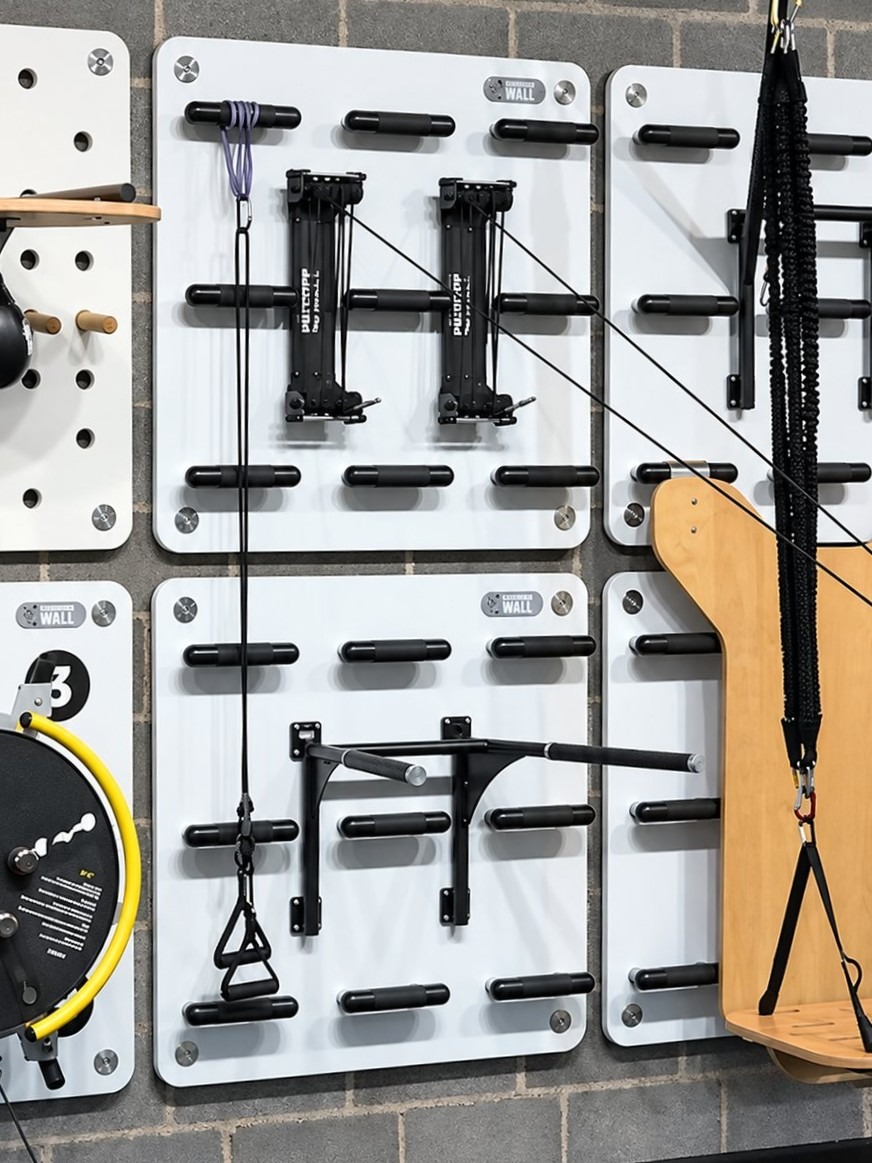
A shared training method can continue when the location changes. Training Wall combines panel-based work with compatible tools and structures that extend selected tasks into the room or to another training area. This lets professionals connect fixed and mobile resources without treating every change of location as the start of a completely different programme.
What the wall contributes to the training method
A wall installation provides fixed points for selected tools. Mobile structures and compatible accessories can extend parts of the programme to another area. Speed Trainer and other tools create resistance options, but the chosen attachment and working space determine which movement is practical.
Fixed panels provide a familiar reference for positioning tools and organising contact points. That reference can help the coach repeat a task or make a deliberate adjustment. Work performed away from the wall introduces a different spatial context: the athlete may need more travel, another support arrangement or a mobile station. The method remains recognisable when the exercise objective stays clear.
Extending selected tasks beyond the panel
For a facility or coach, this means planning the equipment around session flow: what stays installed, what moves, and how transitions are managed. The result is a coherent method across spaces rather than separate collections of unrelated exercises.
Moving an exercise does not automatically preserve its mechanical demand. Attachment height, cable direction, distance and support can change the way resistance acts on the person. Rehearse the task in its new position before comparing loads or performance. This allows the coach to use portability as a practical resource while keeping the exercise description accurate.
Preserve the objective and recheck the conditions
When a task moves away from a fixed panel, identify which features should remain comparable. These might include the movement direction, the intended range or the role of the supporting limbs. Then list what actually changes in the new arrangement. Keeping that distinction clear helps the coach describe the exercise accurately and avoids assuming that a familiar tool creates an identical task wherever it is placed.
For example, a pulling exercise can be rehearsed in both a wall-based and a compatible mobile arrangement. Before comparing effort, check the starting distance, attachment height and available path. The athlete may need a different stance to organise the new direction of resistance. Treat that rehearsal as part of the session rather than as lost training time. It provides information for choosing the working version. The benefit of combining fixed and mobile resources is the ability to place a suitable task where it is useful, while still describing its demands honestly.
Keeping continuity when the setup changes
- Identify the movement quality or capacity that should remain the same across locations.
- Select a compatible fixed or mobile setup and define the working area.
- Re-establish the starting position, force direction and range in the new arrangement.
- Adjust the session from the observed response, rather than assuming the two setups are identical.
Working on and off the wall gives a facility more ways to use its space. The value comes from preserving a clear training intention while adapting the equipment to the place where the session happens.
Plan your training space with the Training Wall configurator or contact our team to discuss a configuration suited to your needs.
Sources and resources
The organisation examples and practical stages are editorial suggestions for this article. Adapt them to the objective, the participant and the equipment instructions.