

01 Oct Portable Training Wall equipment: matching the station to the session
Portability can solve very different problems: taking equipment to a pitch, moving a station between areas of a studio or keeping tools close to the activity. Training Wall offers mobile structures alongside its fixed installations, so a professional can choose what needs to move and what should remain in place. The right choice starts with the session and the route the equipment must follow.
TeamMate and Storage Trolley serve different movement needs
TeamMate provides a portable training structure; Storage Trolley helps organise and move selected tools within a facility. These solutions serve different logistical needs. A wall-mounted storage solution, by contrast, belongs to a fixed setup. Choosing between them starts with where the session happens and what has to move.
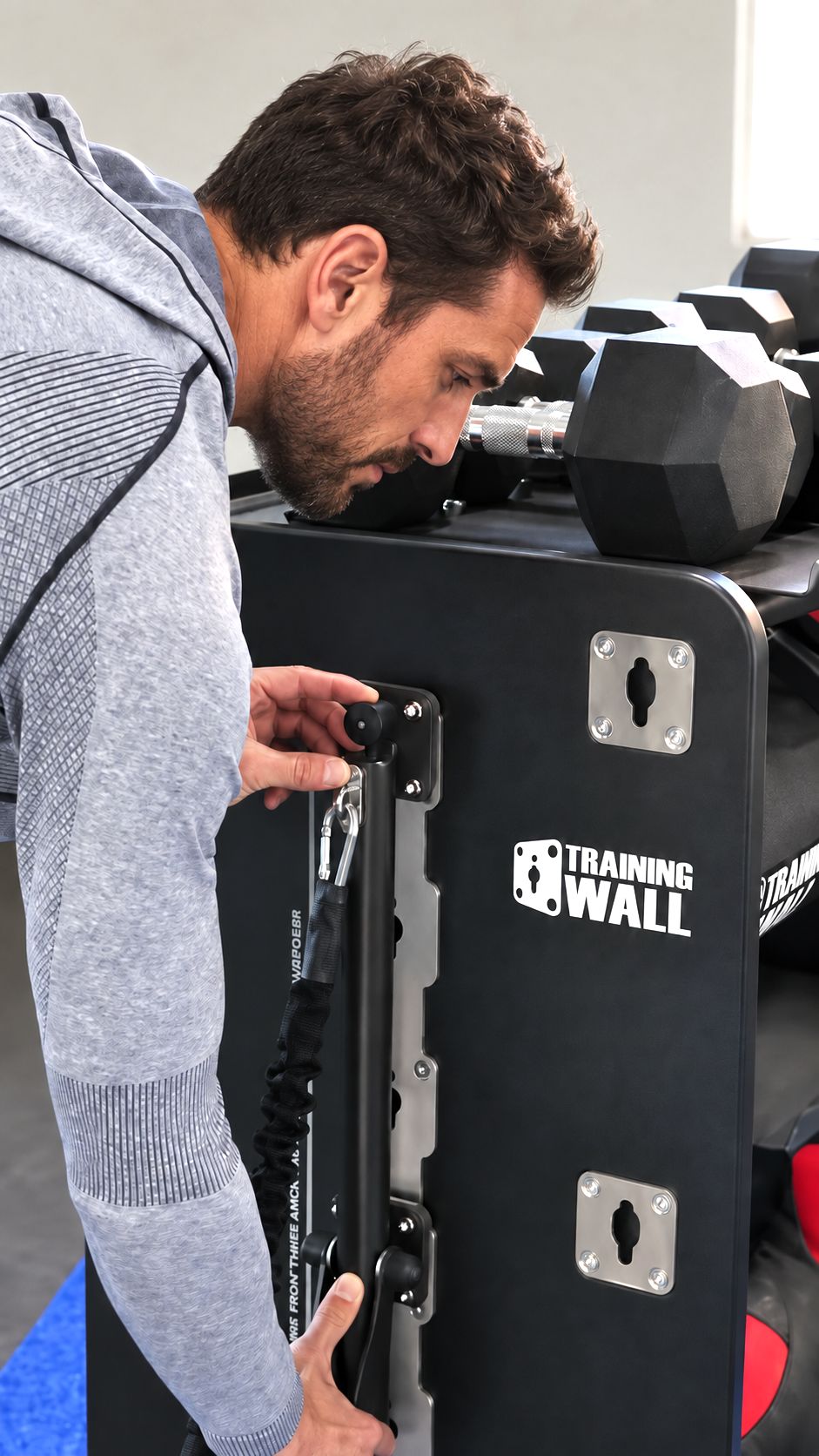
TeamMate is relevant when the coach needs a portable working station, including suitable outdoor training areas. Storage Trolley combines storage and compatible training tools in a unit that can be relocated around the facility. Their usefulness should be compared through the intended workflow rather than through portability alone. Moving an item a few metres and transporting a session outdoors are different requirements.
Designing the journey as well as the destination
Consider the travel distance, available surface, number of participants and tools needed for each block. Portability is useful when it improves the coach’s workflow, preserves safe clearances and avoids transporting equipment that the session will not use.
Doors, changes of level and the distance to the training area can determine whether a mobile solution is practical. At the destination, the coach still needs a suitable surface and enough space for the selected tools. Planning both ends of the journey prevents a portable station from becoming a storage unit that is difficult to use where the session takes place.
Compare the complete journey of the equipment
A useful comparison of mobile equipment begins before the session and ends after it. Consider preparation, movement to the destination, setup, exercise changes and return to storage. A structure that works well in one stage may create extra handling in another. Write down the tools actually needed and the routes they follow. This gives the facility a practical basis for discussing a solution instead of choosing from the word portable alone.
For a trainer working between rooms, access width and the place where the station waits between appointments may be decisive. For a coach taking equipment towards a pitch, the destination surface and the arrangements for returning the material deserve separate attention. These examples illustrate different requirements; they do not establish that every mobile structure is suitable for both. Confirm the intended configuration and handling instructions with the supplier. A short trial of the planned workflow can reveal whether the proposed equipment matches daily use before expanding the selection of accessories.
Choosing a portable setup in four stages
- Describe where the station starts, where it will be used and how often it needs to move.
- Select only the tools that support the planned programme and confirm the compatible arrangement.
- Check the route, working surface and space needed for participants and the coach.
- Plan the return and storage of the equipment so the next session starts from an organised setup.
A mobile training system should make the professional’s work easier from preparation to pack-down. Matching the structure to the actual movement of equipment is more useful than treating every portable option as interchangeable.
Plan your training space with the Training Wall configurator or contact our team to discuss a configuration suited to your needs.
Sources and resources
The organisation examples and practical stages are editorial suggestions for this article. Adapt them to the objective, the participant and the equipment instructions.