

01 Oct Postural control as part of functional movement training
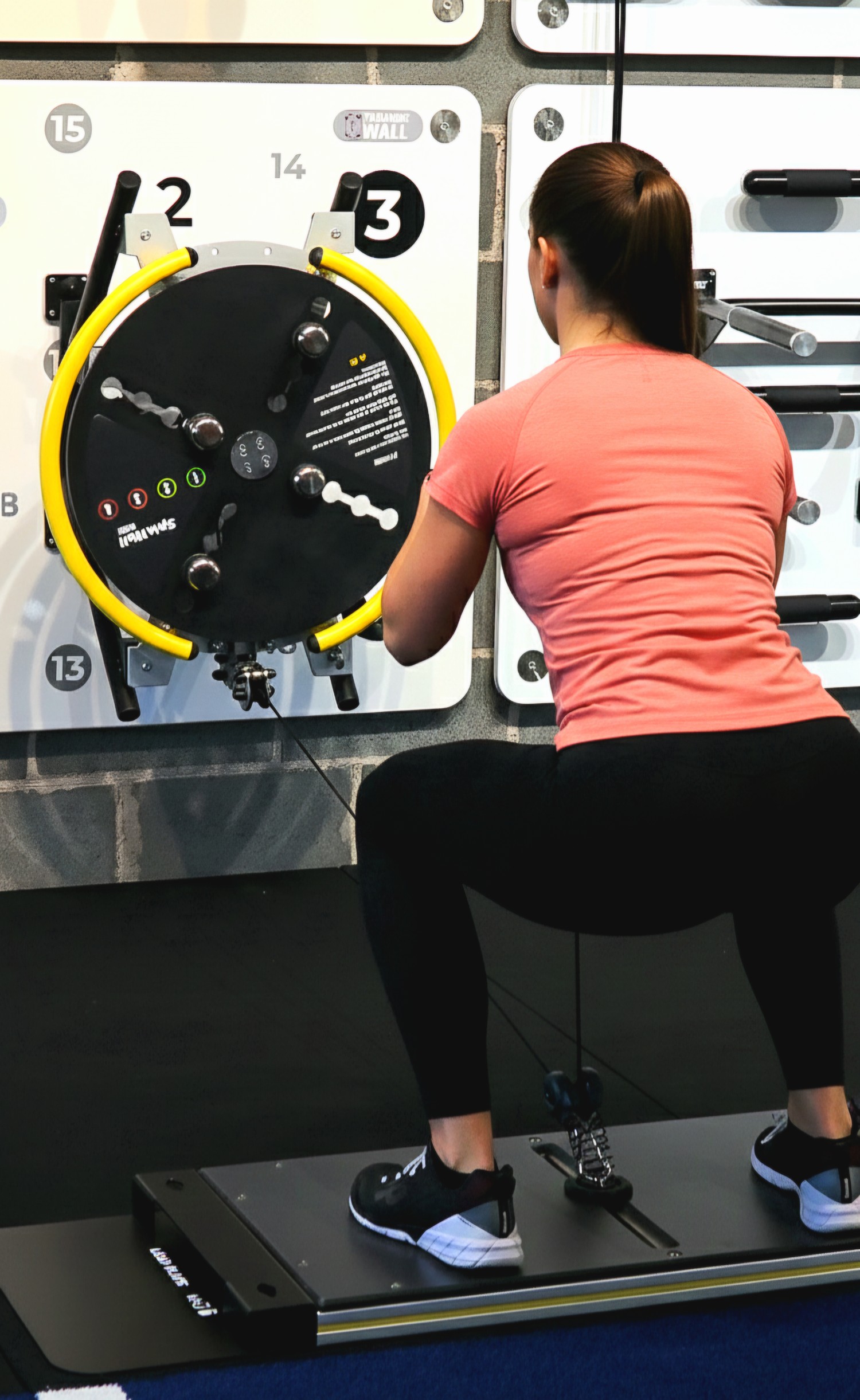
Postural control is present whenever a person manages body position during a task. Reaching, pulling, changing support or working against resistance all create opportunities to observe it. Training Wall gives professionals different points of contact and loading options for integrating this work into a broader session, connecting alignment and coordination with the movements the person is learning to perform.
Observing posture while the person moves
The coach can observe how the trunk, shoulder girdle and lower limbs coordinate under a specific demand. Altering the attachment, resistance or support changes that demand. The aim is to find a level at which the person understands the task and can perform it with appropriate control.
A useful instruction describes the task rather than demanding a rigid position throughout every exercise. The desired relationship between trunk and limbs depends on whether the person is rotating, reaching or resisting a pull. Watching the start, movement and return can reveal different challenges. This gives the coach a more specific basis for adjustment than judging a single still posture.
Changing the demand without losing the objective
TeamMate and Storage Trolley extend the range of places and setups in which selected tools can be used. For rehabilitation, an individual assessment remains essential; the equipment supports an exercise plan but does not diagnose or treat by itself.
The easiest progression is not always to add load. Changing the direction of pull, reducing external support or asking for a longer controlled reach can each modify the exercise. Select the variable that relates to the intended skill. When too many conditions change at once, it becomes harder to identify why execution improved or deteriorated.
Compare the person with their own previous task
Postural observation becomes more useful when the exercise conditions are clear. Record the support, resistance direction and intended movement, then compare repetitions within that context. A change in trunk position may be appropriate for one task and inconsistent with another. The professional therefore needs to explain what is being observed instead of applying a single visual standard to every movement. The participant’s description of effort and comfort also helps interpret the response.
As a practical example, ask for a controlled reach from a supported position, then repeat it with a small change in reach distance. Keep the other conditions similar enough to understand the effect of that adjustment. If the person finds the return harder to organise, the next step could be a shorter range or more support rather than more resistance. This is a teaching example, not a diagnostic test. The aim is to make progression observable and to connect the chosen challenge with the movement the person is learning.
A practical observation and progression sequence
- Define what the person should move and what they should control during that particular exercise.
- Establish a version with sufficient support and a manageable resistance.
- Observe the movement and return, asking the participant how the task feels.
- Adjust one relevant condition and compare the new execution with the previous version.
Within Training Wall, postural work can remain connected to the rest of the session. The equipment offers ways to vary the demand, while the professional’s observation keeps those changes purposeful and appropriate to the user.
Plan your training space with the Training Wall configurator or contact our team to discuss a configuration suited to your needs.
Sources and resources
The organisation examples and practical stages are editorial suggestions for this article. Adapt them to the objective, the participant and the equipment instructions.